Bali Museum: Ancient Bali
· BootsnAll
 Bali Museum in Denpasar has many interesting parts to it. The first part I visited contained artifacts from ancient times. In the main building was an ancient stone Sarcophagus. The Sarcophafus is a stone coffin from prehistoric times (600BC-800AD), used to bury the dead body of the village leader. These are the smallest type of Sarcophagus where the corpse is folded into 3. The examples on display were found at Petang in Badung and Nongen in Karangasem.
The stone throne was one of the remains of the megalithic tradition in the carpenter period. The stone throne was used as a sitting place for the chief of a tribe, or a group. The stone on display is from Gelgel village in Klungkung.
The Stupika is a minature of a Stupa, the holy symbol Buddhism. Made of clay and inscribed with prenegari writing and sanskerta language. The Stupika were used as a worship media for early Buddhists in Bali and were found at Pejeng, Tatiapi and Blahbatuh in Gianyar. The writings on the Stupika are similar to writings at the Kalasan Temple in Central Java and is probably from the 8th Century.
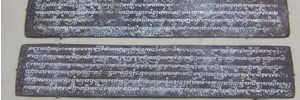
The Prasati Tembaga is a bronze inscription made on a copper sheer, with old Balinese characters. The sheet was found near Kintamani in Bangli and was made by King Jayapangus in the 12th Century.